Updates to VRLTA: A Guide for Landlords
As a landlord, what do I need to know about the recent updates to the Virginia Residential Landlord and Tenant Act?*
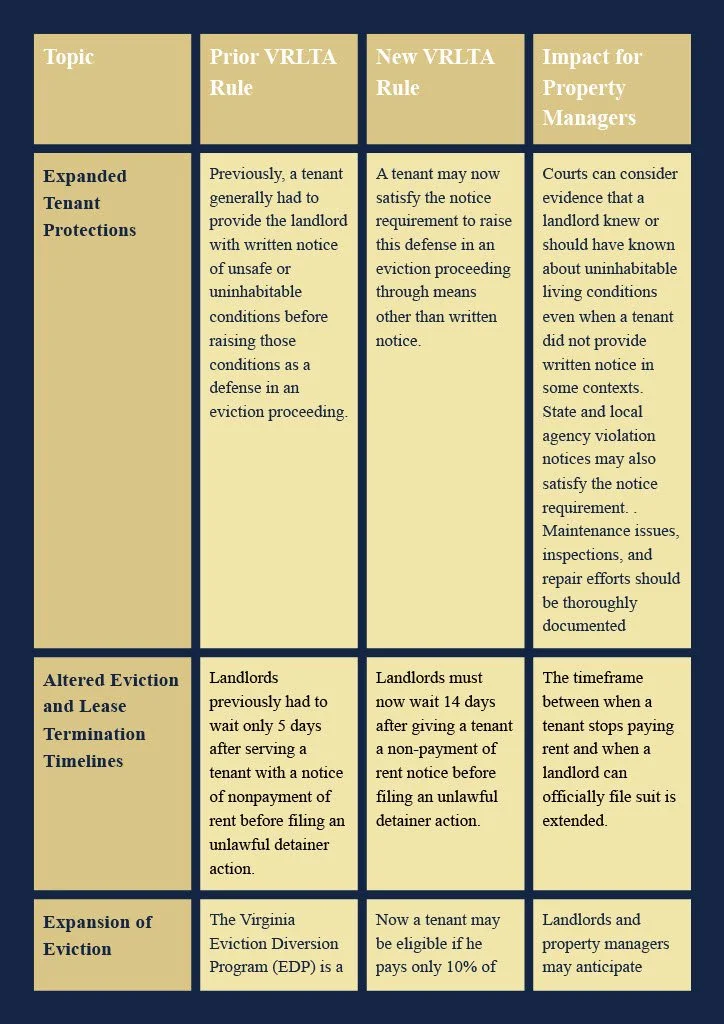
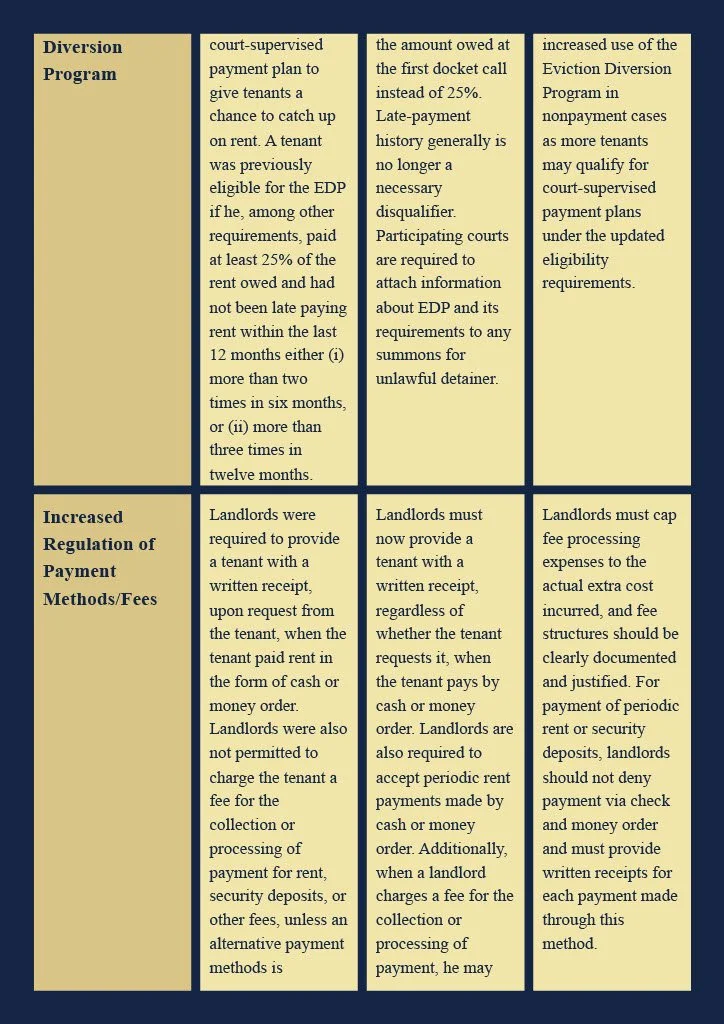
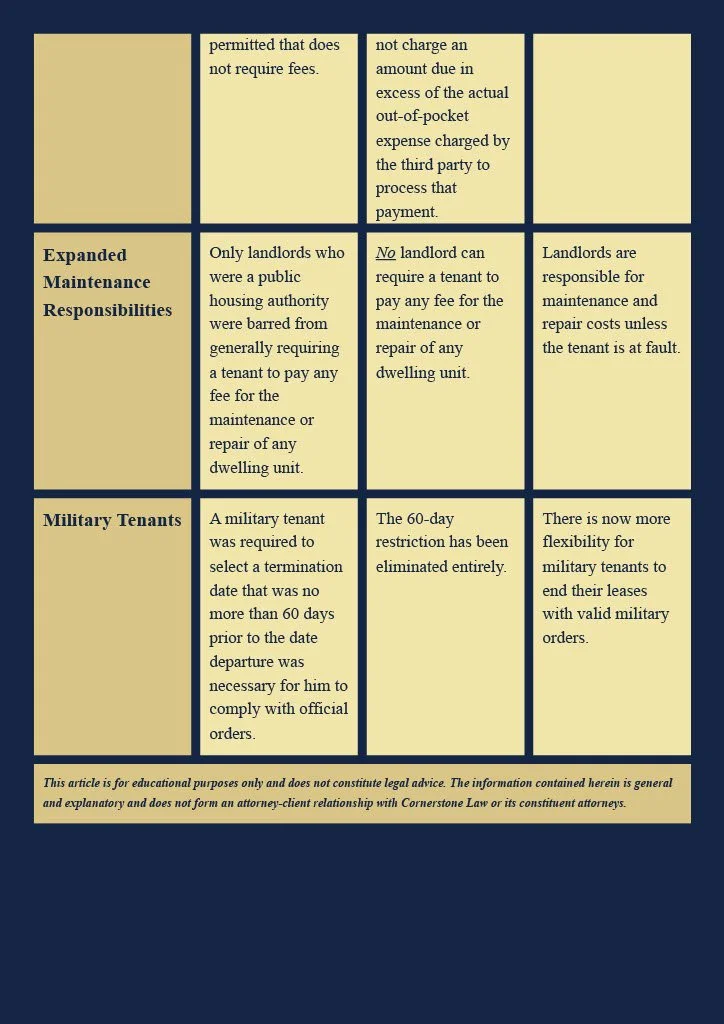
Effective July 1, 2026, tenants have expanded protections. Landlords now face tighter fee controls, longer eviction and lease termination timelines, higher maintenance standards, and expanded eviction diversion procedures.
What does that mean in practice? Below is a summary of the major changes and how they may impact property managers.
Pending Legislation to Watch
Landlords may soon be required to provide potential tenants with additional information regarding their application, deposit, fees, and requests for information.
New legislation could soon be enacted that requires landlords to be more transparent to potential tenants regarding application fees and details. A landlord may have to clearly disclose key details to applicants, including all application fees or deposits, whether they are refundable, the screening criteria used, and any factors that could lead to denial. If a consumer report is used, the landlord may also have to identify the reporting agency, inform applicants of their right to obtain a free copy of the report, and dispute any inaccurate information if their application is denied or adversely affected.
Practical Considerations for Landlords Relying solely on the absence of written notice when evaluating maintenance issues is risky. Landlords and property managers should document all tenant complaints, inspection observations, vendor communications, and repair efforts, regardless of whether written notice was provided. Courts may consider actual knowledge, agency inspection notices, and other evidence when evaluating habitability defenses. Thorough documentation of maintenance issues and repair efforts remains one of the best defenses against these claims.
Landlords and property managers should account for the longer statutory notice periods when planning eviction timelines, as filing prematurely could result in dismissal, delay, or additional costs. Property managers may wish to reevaluate their collection and eviction timelines in light of the longer statutory notice periods and the increased availability of eviction diversion programs.
Review payment policies to ensure rent and security deposits can be accepted by permissible payment methods. Unsupported or excessive processing fees could become a point of future dispute during litigation.
Ultimately, Virginia’s 2026 legislative changes expand tenant protections while imposing additional procedural and compliance obligations on landlords and property managers. Accordingly, landlords and property managers should review their current policies and procedures to ensure compliance with the updated VRLTA. who want to thrive should comply with procedure as effectively as they can. If you have questions about how these legislative changes affect your rental properties, contact Cornerstone Law, P.C. at (757) 974-9067 or office@cornerstonelawva.com.
*This article is for educational purposes only and does not constitute legal advice. The information contained herein is general and explanatory and does not form an attorney-client relationship with Cornerstone Law or its constituent attorneys.